

Tech-Enhanced Efficiency for Rural Routes
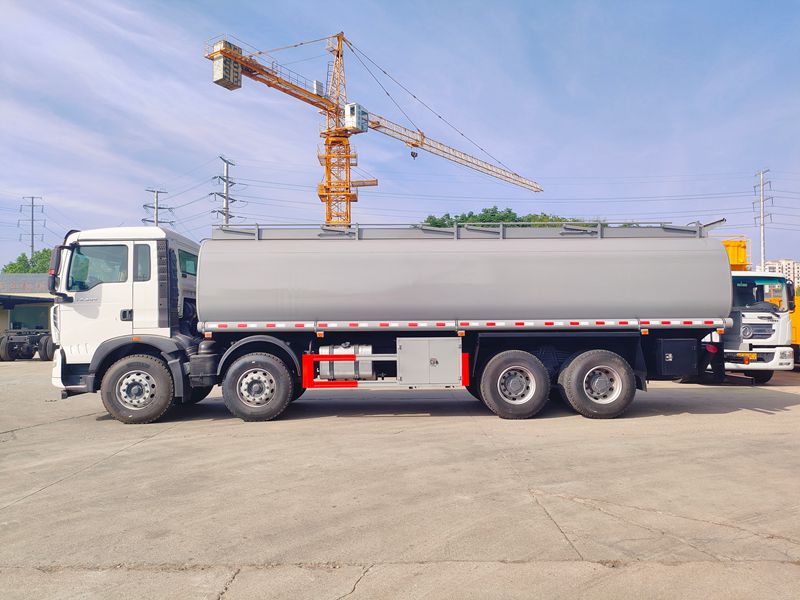
To optimize deliveries in remote areas, oil tanker trucks are integrating technologies that improve navigation and reduce downtime Oil tanker truck for sale Oil tanker truck for sale. In Kenya’s Turkana County, where road maps are outdated and cell service is sparse, tanker trucks use satellite navigation systems paired with community-sourced route data.Oil tanker truck for sale Local residents share real-time updates on road conditions (e.g., washed-out bridges Oil tanker truck for sale, mudslides) via a dedicated app, which the trucks’ navigation systems use to adjust routes Oil tanker truck for sale.
“The app has been a game-changer,” says a truck driver in Turkana. “Last month, a flash flood washed out a road I usually take—another driver shared the info on the app, and I rerouted to a safer path. Without it, I would have been stuck for days.” The technology has reduced delivery delays in Turkana by 40% and cut fuel waste from detours by 25%.
In Canada’s Yukon Territory, oil tanker trucks use AI-powered fuel consumption trackers to optimize loads for cold weather. The AI analyzes temperature data, road grades, and truck weight to recommend the most fuel-efficient load size—critical in a region where fuel is expensive and refueling stations are scarce. “In winter, carrying too much fuel increases drag and uses more diesel,” explains a Yukon fleet manager. “The AI helps us balance load capacity with efficiency, saving us 12% on fuel costs annually.”
Challenges: Funding and Local Capacity
Despite these advancements, oil tanker trucks face barriers to scaling impact. In low-income countries, funding for modified trucks (e.g., off-road models, blockchain sensors) is limited. In Tanzania, the “Fuel for All” initiative relies on donor grants Diesel tanker, which are unpredictable—threatening the expansion to 500 more villages Diesel tanker. “We need long-term government funding to keep the program running,” says an NGO coordinato r. “Donations can dry up, but the communities’ need for fuel doesn’t.”
Local capacity is another challenge Diesel tanker. In Nepal, many village depot operators lack training to maintain the small fuel storage tanks or use digital payment systems for fuel sales. This leads to occasional stockouts or payment delays Diesel tanker. To address this Diesel tanker, NGOs are launching training programs for depot operators, Diesel tanker covering inventory management and basic accounting Diesel tanker.
In Nigeria, Diesel tanker poor road infrastructure damages customized tanker trucks—especially those serving mining areas Diesel tanker. The government has pledged to upgrade 10,000 kilometers of rural roads by 2027, but progress is slow, leading to higher maintenance costs for fleet operators Diesel tanker.